Updating...
Sorry I've been so slack for the past few months. Now I'm trying to work on updating with more useful information but I do still have a stack of recipes that I have made (and think I remember how) to post soon. Stay with me...
Sorry I've been so slack for the past few months. Now I'm trying to work on updating with more useful information but I do still have a stack of recipes that I have made (and think I remember how) to post soon. Stay with me...
I found a vegan protein shake! There's only one I can find among the wall of whey powders and it only comes in one flavour (orange) but it's something at least!
It's "SAVAS Aqua Soy Protein" and cost me about 3000 yen for 330 g. 14-21 g per shake. A 3 scoop shake (21 g) is about 67 Cal and 14 g protein in every shake. Even if you're not training for anything but want to boost your protein, it's not a bad idea! 
I have recently found a great Tokyo-based Animal Rights group that focuses on the issue of animal testing. Japan Anti-Vivisection Association (JAVA) has cruelty-free shopping guides available on their website as well as awareness/fund raising type stuff (t-shirts, stickers, bags, etc). Check them out at www.java-animal.org


I’m currently training for my first marathon and have been looking for tips for vegans. Most of the forums and sites I’ve found have just been discussing the regular issues of marathon training. I’m left to think that vegan training is no different but without specialized products that cater to us or vegan meal plans, I don’t think it’s the same at all. I intend to post on here any tips or products I find that are specifically vegan and also to post any advice I find or have on what to eat as well.
All marathon trainers recommend replenishing your body’s protein stores as soon as possible after every run to help repair muscle damage and prevent soreness and injury. Most sites I’ve seen stress that the first 15-30 minutes after a run is the optimal time for protein absorption and that, following a run, the first thing you should do is wolf down some high-protein energy bar or shake. I finally found a Vegan Protein shake (SAVAS Aqua Soy Protein--see post).
So far I have developed the habit of eating a can of minced seitan (Saniku’s “Gluten Burger”) mixed with ½ Tbsp of ketchup and ½ Tbsp of sweet chili sauce (just for a bit of flavour) and accompanied by a glass of V8 juice (from Costco) with a tsp of spirulina mixed in (ordered from home). This power lunch seems to be doing a great job of keeping my body energized and free from pain. 
Today’s post-running meal was even simpler than the one above. I just took a block of tofu, pressed out some of the water, put it in a bowl, and added a swipe of ginger paste and about 1-2 Tbsp of ½ sodium soy sauce. It’s a delicious, high-protein, low-calorie, quick, filling, easy snack. 
One of the obstacles I have faced with vegan protein sources is that they tend to also be high in calories. I am hoping to lose weight (or at least not gain) while doing this training and so have compiled a little chart of my favourite vegan protein sources as arranged by calories per gram of protein and yen per gram of protein (I know, I’m an excel nerd, what can I say). Let me know what you think…
| Calories/gram | Yen/gram | Soy Protein Shake | 4.79 | FD Tofu | 2.1 |
|---|---|---|---|---|
| Gluten Meat | 6.23 | Tofu | 4.1 | |
| Gluten Burger | 10.12 | Soybeans | 5.5 | |
| FD Tofu | 10.14 | Kidney Beans | 7.5 | |
| Tofu | 10.90 | Gluten Burger | 8.7 | |
| Tempeh | 12.23 | Mixed Beans | 8.7 | |
| Mixed Beans | 12.88 | Chickpeas | 9.8 | |
| Soybeans | 13.33 | Gluten Meat | 11.2 | |
| Kidney Beans | 14.98 | Tempeh | 13.0 | |
| Chickpeas | 19.02 | Protein Shake | 13.64 |
How To Be A Healthy Vegan In Japan:
Protein たんぱく質
For the spoiled vegan used to meat analogs and vegan TV dinners, how do we still get all the nutrients we need with a whole food, from scratch diet? Here are a few suggestions on how to meet your daily intake goals with quick, easy, and available foods.
*Note: totals listed in the charts below may vary depending on brands, etc. Check labels to make sure how much you’re getting.*
The usual Daily Recommended Intake of protein is 0.8 g per kilo of body weight. http://www.vrg.org/nutrition/protein.htm states that some allowances may need to be made for the differences in absorption between plant and animal proteins. To be on the safe side, vegans should consume somewhere between 0.8 and 1 gram of protein per kilogram of body weight per day.
Of course the most obvious and economical sources of protein in Japan come from soy, in its many forms. In addition to regular, run of the mill tofu, other soy products include:
Abura age (あぶらあげdeep fried tofu pockets)
Agedoufu (揚げ豆腐deep fried blocks of tofu)
Koyadoufu (高野豆腐freeze dried tofu blocks about 100 yen/5 pack)
Okara (おから the pulped skins of the soy beans left over when making tofu, VERY cheap, throw a handful into whatever you’re making, also good for baking)
Yuba (湯葉 the hardened skin that forms on top when making soy milk, very delicate and not so cheap but can be tasty)
and the infamous
Natto (納豆smelly, sticky fermented soy beans that are hated by the majority of foreigners and the wise people of Osaka-fu).
The most widely used and cheapest seeds are sesame seeds (ごま). Adding a handful to whatever you’re cooking is a great way to increase your protein intake. Make sure you grind them slightly or chew them well to release their nutrients.
There are also some specialized products you can find at health food stores here, though not nearly as many as at home. Most health food stores sell dried unflavoured textured vegetable protein (TVP), tempeh, and gluten “meats” (seitan). Red and green lentils and some less common (in Japan) beans (like chickpeas) are also available at about four times what you’d pay back home.
Nuts are ridiculously expensive in Japan. Almonds are great sources of protein and calcium but cost about 300 yen for 100g. Cashews and pistachios are similarly expensive. Walnuts (くるみ)are very common and, of course, peanuts are cheapest and most widely available. Foreign stores, like Costco or ethnic import stores, are the only option for affordable nuts.
Beans are usually quite expensive in Japan. Canned beans and a few varieties of dried beans (soy) are available at Supermarkets. Legumes such as red and green lentils are also available but cost a lot. A large percentage of Japanese immigrants come from South America, especially Brazil and Peru. Depending on the area in which you live, there may be import or ethnic food stores that are an excellent, cheap sources of dried lentils and beans. If these stores aren’t available where you live, check out a Costco near you.
My favourite way to get protein is with a few traditional bean sweets. Adzuki beans (mashed into sweet red bean paste or anko) feature heavily in this category of Japanese desserts. While the mochi variety are usually vegan, always check for eggs and milk kanji. The wafer-looking shapes (usually patterened circles or fish) filled with anko are also delicious and usually vegan.
In the bean sweets category I have to digress a moment to include a recommendation of my absolute favourites. Those are kurodama (black sugar and edamame balls, available only in Kofu, Yamanashi), yomogi mochi or kusa mochi (green, made from a grassy weed that is very healthy), and ichigo daifuku (mochi filled with anko with one ripe strawberry in the middle, available only in strawberry season).
Whole grains like buckwheat noodles (soba), oats (available at health food stores and Costco), and quinoa (health food stores) also contain significant levels of protein.
Totals in the chart below are mostly taken from products I use personally; nutritional information will vary according to brand. The beans’ totals are from the brand available at Costco. Inari age is abura age that has been seasoned with soy sauce and sugar, ready for making inari sushi pockets. Nutritional information on inari age varies widely! The brand listed here is the cheapest available in my city…
Protein/100g
Freeze-dried tofu 51.8
Lentils 28.0
Peanuts 26.2
sesame seeds 22.5
Almonds 21.3
Pistachios 21.2
Tempeh 18.8
Saniku gluten meat 17.5
Saniku gluten burger 16.9
Oats 16.8
Soba 15.8
Cashews 15.3
Walnuts 15.2
Soybeans 14.7
Edamame 13.0
inari age 12.5
Miso 11.8
Mixed beans 9.2
kidney beans 10.7
Chickpeas 8.2
Tofu 6.6
inari age 12.5
agedoufu
yuba
Okara 4.8
natto
Anko 13
Anko no kimo 10
How To Be A Healthy Vegan In Japan:
Calcium カルシウム
Current daily recommended intakes specify at least 1000 mg calcium. Too much is better than too little! Personally, I take calcium supplements everyday and recommend everyone (vegan or not) do the same. These supplements are available as widely here as at home.
Sesame seeds are widely available and very cheap. Adding a handful to whatever you’re making is a great way to boost calcium levels.
Dried figs are also cheap and available at most vegetable stands and supermarkets.
Almonds are a great source of calcium but can be expensive here outside of foreign import stores.
Edamame as well as standard and black soy beans also contain a lot of calcium but that doesn’t seem to hold true once they are processed. Tofu here is not usually packed in calcium sulfate and calcium levels are usually low (for some reason my freeze-dried tofu seems to be high in calcium).
Unlike Western soy milk, Japanese soy milk contains minute levels of calcium, often contains milk products (so be careful!), and is not very tasty (as it doesn’t usually contain sugar or other additives). Eden Soy and Kirkland brand fortified soy milks are available at health food stores and Costco. Rice Dream is also sometimes available but is not a significant source of calcium.
Other milk analogs like soy yogurt, soy ice cream, soy sour cream, and soy cream cheese, are not available at all. I have seen soy cheeses (and almond cheese) but these always contain casein and are thus not vegan.
Most leafy greens like kale, collards, and Swiss chard are not available here either. Spinach seems to be the only exception.
Calcium/100g
sesame seeds 718
freeze-dried tofu (5 blocks) 482
soybeans 277
almonds 248
edamame 197
garlic 181
raw kelp 168
raw wakame 150
dried figs 144
wasabi root 128
spinach 99
tempeh 95
oats 54
soy milk 4
This is a great recipe I adapted from one I saw on the internet. No oil is used to fry so it is lower in fat/calories. My favourite part is the raisins. I was worried I added too many but it was delicious. Don't be stingy with them.
Ingredients:
1/4 cup water
2 Tbsp chopped onion
1 clove garlic, chopped
1/2 tsp ginger, chopped
2 baby eggplants, diced
1/2 tsp turmeric, ground
1/2 tsp cumin, ground
1/2 tsp coriander, ground
1/2 tsp paprika, ground
1/2 tsp black pepper, ground
1/4 tsp salt
1 16oz can of tomatoes, crushed or diced
1 cup chickpeas, (drained if canned; soaked and boiled if dried)
1/4 cup raisins
2 Tbsp fresh parsley, chopped
Method:
1. Heat water over medium/high heat in a medium sized non-stick frying pan/pot.
2. Add onion, garlic, and ginger and cook for a bit.
3. Add the eggplant and cover. Let cook for a few minutes.
4. Add spices (turmeric through salt) and cook for 1 minute, stirring continuously.
5. Add tomatoes, chickpeas, raisins, and parsley and bring to a boil.
6. Simmer for 15 minutes.
7. Salt and pepper to taste.
I made the tempeh burgers again and saved the leftover marinade. I added the juice of 1 lime and cut up another package of tempeh and marinaded it overnight. The next day I put it in the non-stick pan with a little of the liquid to brown it a bit. I sliced 1 small zucchini thinly on the diagonal and added it to the pan along with the rest of the marinade. I cooked it over medium heat until (almost) all the liquid had evaporated (about 5-8 minutes) and served. It was a delicious small meal. Over rice it would be very filling.
To celebrate Canada Day this year I shared a little treat, straight from Canada, with all of my coworkers. I found some 100% real Canadian maple syrup maple cream cookies and 100% real Canadian maple syrup maple candies at the local health food store. In true Japanese fashion, I got some little clear wrapping bags with red hearts on them and gold twist-ties and made up little bundles. In Japan, you can never just bring in a box of cookies or something, presentation is everything. Everyone was so surprised that the cookies were vegan and asked where they could get some too...
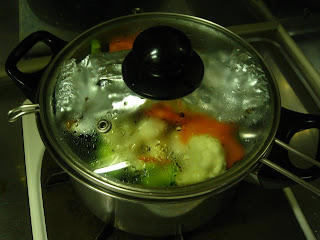
I was always skeptical of steaming tofu but this recipe was good.
Ingredients:
200 g firm tofu; drained
1/4 cup sodium reduced soy sauce
1 1/2 Tbsp mirin
1 tsp rice wine vinegar
1 Tbsp minced fresh ginger
1 Tbsp minced garlic
1 cup broccoli florets; small
1 cup cauliflower florets; small
1 carrot, thinly sliced
1 Tbsp sliced negi
Method:
1. Combine mirin, vinegar, ginger, garlic, and soy sauce in a small bowl.
2. Cube tofu and place on a sheet of aluminum foil.
3. Fold the foil into a leakproof bowl. Pour in the marinade mixture and fold the foil into a packet tightly sealed.
4. Pour a small amount of water into a saucepan and put over medium-high heat. Place the veggies (including the negi) and the tofu packet in a steamer (or metal strainer) and place on top of the saucepan with a lid over them.
5. When veggies are tender but not mushy, turn onto a plate. Open the tofu packets and pour the contents over the veggies.
6. Serve hot.
Here are some interesting new things I found at local shops:
This is a watery gelly-like dessert. You get the liquid with the konniyaku strips in it and a separate packet of sweeteners/flavours. You pour the sweetener into the water and enjoy. It was a big strange actually with a very gelly-like texture and VERY sweet (but you can adjust that depending on how much of the black stuff you put in). Overall, not bad. I would get it again if I were in a pinch.
I was in a regular old grocery store yesterday and found vegan belgian chocolate! made with rice milk and marketed as Lactose Free. Look for it in your town too!
Soyatoo's Soya Schlag Creme (Topping Cream) was a wonderful discovery. This was at my local health food store and so delicious. You just have to whip it a bit in a bowl before serving. It says to use an electric mixer but I just used a fork for a minute or so and it worked fine. 
The Vegan Ronin gave me a tip for a vegan ice cream available outside health food stores. It is called IV and they have a line with 5 different flavours including black sesame, mango banana, and maple vanilla. mmmm... Check out their website here.
Easy recipe just made with regular pancake mix, soy whipped cream, and fresh fruit.
Ingredients:
200g pancake mix
3/4 cup soy milk
1/2 tsp baking powder
1 cup soya whipped topping
1 pint of fruit
Method:
1. Mix pancake mix, soy milk, and baking powder in a large bowl until smooth and battery. I added some more water to get it really thin so it is easier to spread thin in the pan (making crepes and not flapjacks).
2. Heat non-stick fry pan over medium heat. Pour in batter and immediately spread as thin as possible. Flip.
3. Add soya whipped topping and fruit.
4. Roll.
DELICIOUS!!
I didn't oil the pan as I have a non-stick cake pan. Also, I used raisins instead of chocolate chips and just placed a few walnuts on top as a garnish.
Otherwise, exactly reproduced from: http://www.grouprecipes.com/6118/vegan-banana-cake.html
Ingredients:
3 Ripe Bananas
1/4 Cup Vegetable Oil
1/2 Cup Brown Sugar, packed
1 teaspoon Salt
Replacer equal to one egg (+ water to package direction - 1tsp to 1T)
1 teaspoon Vanilla
1 1/2 Cup Soft Whole Wheat Flour
1 teaspoon Baking Powder
1/2 teaspoon Baking Soda
1/2 Cup Semi-Sweet Chocolate Pieces
1/2 Cup Broken, Toasted Pecans (optional)
Method:
1. Preheat the oven to 350º.
2. In a large mixer, cream the bananas with the oil, sugar and vanilla.
3. Prepare the egg replacer as to the package directions and add it and the salt to the banana mixture.
4. Once well combined, add the baking powder and soda, followed by the flour, adding it in two batches, followed by the chocolate and pecans (if using)
5. Oil and dust a 8″ round pan with flour. Pour in the batter and bake on the middle rack for about 40 -45 minutes.
6. Check bounce at the center of the cake or insert and remove a toothpick. The cake is moist but it should come out fairly clean.
This recipe will also make a great loaf (55 - 65 minutes), 12 muffins(18-20 minutes) or 18 mini muffins (about 15 minutes).
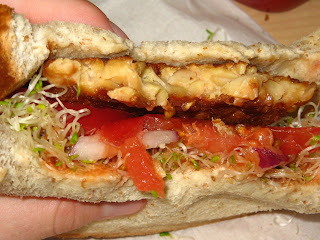
Tempeh is definitely my favourite food now and especially since I have found a store in Kofu that sells it (300 yen for 120g--but it is well worth it!) These burgers are the most delicious I have had since leaving Byron Bay and the gorgeous beet, soynaise and sweet chilli lentil burgers of Fundies Cafe. I made some modifications to make it lower in calories and it was just as good! Makes 2 burgers.
Modified from the following website: http://find.myrecipes.com/recipes/recipefinder.dyn?action=displayRecipe&recipe_id=458797
Ingredients:
120g package tempeh
water
2 Tbsp low-sodium soy sauce
1 tsp vegetable oil
1 tsp grated peeled fresh ginger
Dash chilli powder
1 garlic clove, minced
4 slices thick wholegrain bread
ketchup
1 tomato, sliced
2 slices onion
1/2 cup alfalfa sprouts
Method:
1. Slice tempeh widthwise so you have two thin squares
2. Combine garlic, ginger, chilli powder, soy sauce, and oil in a small tupperware container (I used a square ziploc one and it was the perfect size).
3. Add a bit of water.
4. Add tempeh and put in enough water so the marinade just covers the tempeh (this is why a container with a smaller base is better.)
5. Marinade over night or for a few hours at least.
6. Heat a non-stick frying pan over maximum heat.
7. Cook tempeh in marinade until outside starts to brown (/blacken) and liquid is mostly evaporated.
8. Place tempeh and veggies on bread, top with ketchup and another slice of bread.
9. Enjoy.
The second time I made these I tried not using oil at all and the burgers really didn't soak up the flavour as much. I am not expert on marinades, but it seems the oil is really a necessity.
I have to say, I tried the Vegan Ronin's Omlet recipe and it didn't work at all for me. I don't think I put in enough flour. The flavour was great but it turned out more like runny scrambled eggs. I will try it again until I succeed and post the amounts I use here.
To be continued...
A great, well-balanced, and tasty meal for two. Some veggies, some protein, some calcium (sesame seeds). It's got it all.
Ingredients:
100g soba, cooked and cooled
1 cup chickpeas, soaked overnight and boiled for 1 hour if from dry, drained and rinsed if canned
1 carrot, grated
1 Tbsp purple onion, chopped
2 Tbsp sesame seeds
2 stalks celery, chopped
1 1/2 Tbsp vinegar (balsamic, rice, white, whatever you've got)
2 1/2 Tbsp lemon juice
garlic powder to taste
Method:
1. Combined ingredients in a large bowl.
2. Mix well and serve cold.
This recipe is really not a tasty one. It is pretty bland and is not a dish I crave but it is very healthy and small quantities will make a great side dish to a meal rich in flavour.
Ingredients:
1/4 cup dried hijiki, soaked in warm water for 20 minutes and strained/pressed.
1 carrot, grated
1 Tbsp sesame seeds
1 tsp soy sauce
Method:
Combine ingrients in a large bowl and serve.

Ingredients:
1 cup vegan margerine
3/4 cup brown sugar
2 1/4 cup flour
Method:
1. Preheat oven to 177C (350 F).
2. Cream margerine and brown sugar.
3. Add in flour.
4. Mix until well-mixed.
5. Form 1" balls.
6. Roll in some extra sugar (optional).
7. Place on a cookie sheet about 2" apart and flatten with a fork (dipped in warm water) to about 1/4" thick.
8. Bake for 10-12 minutes at 177. (I have found this time bang on. Keep a close watch though).
I recently picked up some cherry blossom shaped vegetable cutters and I used them as cookie-cutters to make a cute treat for a friend's going away. Instead of flattening with a fork, I rolled the dough out and cut out two circles for each cookie. I then cut out the center of one with a cherry blossom cutter. I covered the bottom circle with strawberry jam and then placed the other one on top. If done when the cookies are still warm, they will stick together very well leaving a beautiful bright red cherry blossom in the center of your shortbread sandwich.
These cookies can also be rolled out and cut into fingers, or into a traditional scored pie shape.
This recipe was invented as I was making a 1/4 batch of tortillas without really paying attention. I 1/4 all of the ingredients except the water... Great stretchy bread though, very good for wraps.
Ingredients:
1 cup flour
1/2 tsp salt
1 tsp baking powder
1/2 Tbsp vegetable shortening
1 cup warm water
Method:
1. Stir dry ingredients.
2. Gradually mix in shortening.
3. Add water (should look like pancake batter).
4. Pour into a (lightly greased or non-stick) frying pan over medium heat until solid and lightly browned.
Easy peasy recipesy. Makes 12 tortillas.
Ingredients:
4 cups flour
2 tsp salt
4 tsp baking powder
2 Tbsp vegetable shortening
1 1/2 cups warm water
Method:
1. Stir dry ingredients.
2. Gradually mix in shortening.
3. Add enough water to make a soft but not sticky dough.
4. Knead for 5 minutes.
5. Roll into 6" rounds 1/8" thick.
6. Place in a (preferably non-stick) frying pan over medium heat until lightly browned.
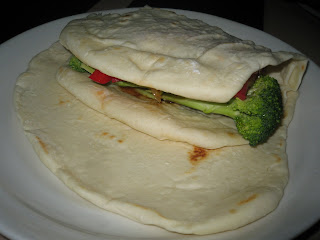
This is equally good as a wrap or just a pasta salad.
Ingredients:
100g soba noodles, cooked and chilled
1 yellow pepper (red or orange are good too), chopped roughly
1 small eggplant, diced
10-15 stalks mini asparagus
1/2 peice negi, chopped roughly
1/2 cup broccoli, chopped roughly
1-2 Tbsp oily sesame salad dressing
4 tortilla wraps
Method:
1. Place all veggies on a roasting pan. Drizzle with salad dressing.
2. Place in the oven on broil or a toaster oven until slightly browned.
3. Using a fork to hold them steady, chop veggies into smaller peices.
4. Mix veggies with soba noodles.
5. Place some filling on each tortilla and wrap.

mmmm...
Ingredients:
1/2 cup brown rice, uncooked
1 cup water or just less
1/4 cup satsumaimo, diced
1-2 Tbsp soy sauce
Method:
1. Combine rice, water, and satsumaimo in rice cooker and cook.
2. Add soy sauce and eat.
Really simple concept but, believe it or not, I had to be told about this one before I thought to make it.
Ingredients:
4 cups romaine lettuce, ripped into small bits and washed thoroughly
1 tomato, diced
1 cucumber, sliced diagonally
1/2 yellow pepper (orange or red are good too), julienne
1/2 peice negi, diced
200g tofu, well-drained and cubed
sesame dressing to taste
Method:
1. Combine all ingredients in a huge bowl and eat. The longer it sits the better.
When buying salad dressings, always be careful of katsuo (fish flavouring). It is in almost everything! I am going to post a homemade sesame dressing recipe for this salad soon.
Satsumaimo (Japanese sweet potato) is quickly becoming my favourite vegetable. It is the star of the Zosui recipe I posted a little while ago and I wanted to find some other easy and delicious recipes which employ this wonderful yam. Here is a really easy and delicious take on an old Western classic.
Ingredients:
satsumaimo
brown sugar
oil or vegan margarine
Method:
1. Slice Satsumaimo and place in a (preferably non-stick) oven-save pan.
2. Drizzle with oil and sprinkle with brown sugar to taste.
3. Put in 210 degree (C) oven.
4. Flip slices at least once. Cook for around 15-20 minutes or until soft and browned.
5. Eat.
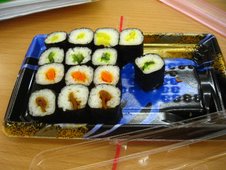
It's time I posted a quick and easy method for another Japanese classic. I used to make veg sushi at home and always had huge rolls with avocado, carrot, tofu, etc. Here I have gotten used to the half size, one filling rolls. Easy to eat and quick to make. I have mostly had kanpyo (marinated gourd) sushi here. And guess what? You can get pre-sliced and seasoned packets of kanpyo that are the perfect size for a delicious makizushi roll.
Ingredients:
3/4 cup uncooked white rice
1 1/4 cups water 
4-5 Tbsp rice vinegar
2 tsp sugar
8 strips of kanpyo
2 sheets of dried nori, cut in half
soy sauce
pickled ginger (optional)
Method:
1. Combine rice and water in rice cooker and cook for around 20 minutes.
2. Mix rice vinegar and sugar until mostly dissolved (heating helps dissolve) and stir into rice.
3. Spread rice mixture in a thin layer on the nori sheet. 
4. Place two strips of kanpyo lengthwise to one side.
5. Roll. Cut. Serve with soy sauce and pickled ginger.
Makes 4 rolls (about 16-20 pieces)
A really fast, tasty, and traditional Japanese dish. It is known as Japanese gruel and often has bits of left over, probably rotting fish thrown in too. This is great to use up any leftovers or vegetables about to turn. mmmm...
Ingredients:
3 cups cooked rice (brown or white)
4-5 konbu dashi
2 Tbsp sake (I used mirin)
1/2 to 1 tsp salt (to taste)
3 Tbsp soy sauce
2-3 cups vegetables, sliced
1/4 cup green onions (or negi), sliced
For veggies I used Japanese sweet potato, mini asparagus, snow peas, and enoki mushrooms. I also accidentally put in half the amount of rice required but it was still good.
The recipe says that good veggies to use are: broccoli, asparagus, sweet potato, green beans, snow peas, squash, renkon, leek, carrots, mushrooms, etc. It says NOT to use cabbage, lettuce, avocado, tomatoes, cucumbers, or beets.
Method:
1. Combine the dashi, rice, sake, salt, soy sauce, and hard vegetables in a pot and bring to a boil.
2. Add other vegetables in order of length it requires for them to cook.
3. Serve.
I served this recipe on a bed of brown rice with a side of steamed fiddleheads, mini asparagus, and sugar peas. Delicious!! 
I wish tempeh was more widely available in Japan. I got it from a health food store in Tokyo. It wasn't expensive but Tokyo isn't extrememly accessible for me! If you can't find tempeh you can use tofu (I did this today with the leftover marinade). It is a different flavour (of course) but also good. I prefer the tempeh but really it is just a delicious sauce! Everything else has been modified to work with the ingredients available in Japan.
Ingredients:
240 g tempeh, cut into strips about 1" thick x 2" wide
1/4 cup lime juice (I supplemented it with half lemon juice)
1 tsp lime rind, finely chopped
1 tsp lemon rind, finely chopped
1 tsp ginger, finely chopped
1 large garlic clove, finely chopped
1 chilli pepper, seeded and finely chopped
1 tsp sesame oil
1 Tbsp brown sugar
1/4 cup soy sauce
Vegetable oil for frying
Method:
1. Combine lime/lemon juice, lime rind, lemon rind, ginger, garlic, chilli, sesame oil, brown sugar, and soy sauce.
2. Marinate tempeh. My recipe said over night but I only marinated mine for about 20 minutes and it was delicious.
3. Heat oil in a frypan on medium high heat.
4. Fry tempeh.
5. Serve!
The recipe then said to heat the remaining marinade with another tablespoon of sugar or so and make a thick sauce but mine didn't really thicken. I just drizzled a bit on the veggies. The sauce is a bit tart (even with the extra sugar) so don't over do it.
Yet another last minute throw it together invention. I use a frozen corn, peas, and carrot mix a lot because they are quick and easy but fresh veggies are welcome too, of course.
Ingredients:
3/4 cup brown rice, uncooked
1 1/2 cups water
400 g tofu, drained and blotted
1 cup frozen mixed veggies
1 tsp garam masala (adjust to taste)
1/4 tsp ground cumin
1/4 tsp ground coriander
2 Tbsp soy sauce
1 Tbsp oil
Method:
1. Combine rice and water in rice cooker and cook for 35 minutes.
2. Fry tofu on medium high heat until browned.
3. Add soy sauce.
4. Add veggies (still frozen is ok).
5. Add spices.
6. Enjoy!
Another good, quick meal with what is on hand. Lentils can be found very cheaply at many specialty stores. A large percentage of the immigrant population in Japan comes from South America so there are many Brazilian or Peruvian stores where dried beans and other legumes as well spices abound. That is also where I got the coriander which is not used at all in Japanese cooking and thus is not available at all in regular Japanese stores.
Ingredients:
1/2 cup brown rice
1 cup lentils
3 cups water
1 clove garlic, minced
2 inch piece of negi, chopped
1 Tbsp soy sauce
1 Tbsp mirin
1/4 tsp ground coriander
1/4 tsp cumin
Method:
1. Combine rice, lentils, garlic, onions, and water in rice cooker and cook for 30-40 minutes.
2. Combine soy sauce, mirin, coriander and cumin in a large bowl.
3. Add the rice, lentils, onions, and garlic mix and stir well.
Of course, if you have the money for fresh vegetables and other luxuries, you can add whatever you like. Again, this makes one very large, very filling serving or two small ones.
Estimated nutritional info:
Energy: 740Cal, Carbs: 140g, Fat:3g, Protein: 42g
I have officially run out of the money that I had budgeted for this month and, in an effort to avoid withdrawing extra funds, I have become very creative with the few bits of food I have left in the kitchen. Here is a quick and easy recipe.
Ingredients:
1/2 cup uncooked brown rice
1 cup water
1 inch piece of negi, sliced
1 cup chickpeas, after having been reconstituted (soaked overnight and boiled for 1 hour) and drained
1 cup frozen mixed veggies (I used a corn, peas, and carrot mix)
1 tomato, diced
1 Tbsp soy sauce
1 Tbsp mirin
Method:
1. Combine the rice, water, and negi in a rice cooker and cook.
2. Combine the frozen veggies and some water in a pot and heat until thawed.
3. Scoop rice into a bowl and add all other ingredients.
4. Stir and serve.
This recipe makes a large serving for one person. But is very healthy and will fill you for the whole day!! Other veggies can be added or substituted in as you like, of course.
Estimated nutritional info:
Energy: 676Cal, Fat: 6g, Carbs: 138g, Protein: 23g